

Blog
Rack Collapse: 7 Warning Signs Your Warehouse Racking is About to Fall

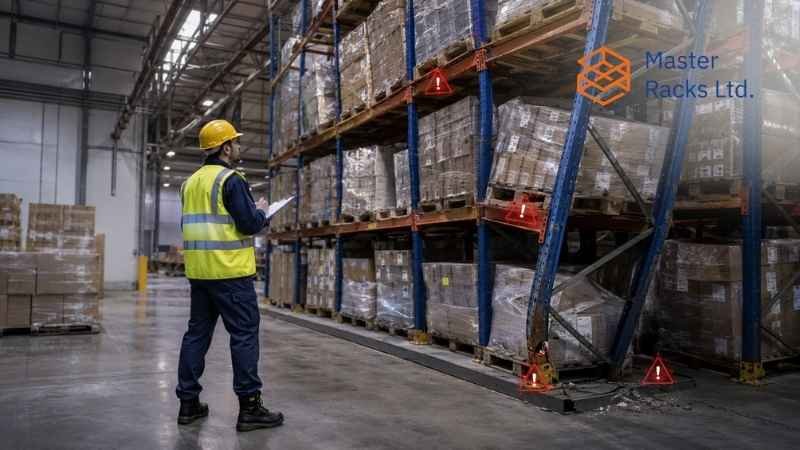
While warehouse racking systems are designed to support heavy loads, they can easily become unsafe over time due to poor installation, overloading, or lack of maintenance. Damage to inventory, equipment, and employee safety can occur due to a rack collapse. Early diagnosis of structural problems is essential in a busy warehouse, particularly in a growing market such as Bangladesh. By recognizing these signs of racking failure, businesses can take steps to prevent the issue, minimize risks, and ensure a safe and efficient storage environment.
At Master Racks Ltd, we specialize in high-quality industrial racking designed for safety and durability. But even the best racking requires proper maintenance. Here are the 7 warning signs that your warehouse racking may be at risk of collapse.
1. Visible Frame Damage or Structural Deformation
Many of the early and obvious signs include damage to the racking structure. Common indicators:
- Bent upright columns — Even a slight bend reduces load-bearing capacity significantly
- Twisted or warped beams — Structural integrity is compromised
- Cracks close to welded joints — These can spread under continued loading
- Uneven vertical alignment — The rack should stand perfectly straight
The load-bearing capacity can be significantly reduced even by small bends. Continuous loading on weak frameworks will eventually increase the likelihood of sudden collapse, particularly during loading or unloading operations. Regular inspection of your warehouse storage solutions can catch these issues early.
2. Overloaded Shelves & Beam Stress
One of the most common reasons for the failure of a warehouse rack is overloading. Signs of overload include:
- Beams that are drooping in the center — A clear sign of excessive weight
- Pallets exceeding weight limits — Always check manufacturer specifications
- Imbalanced loading at different levels — Uneven distribution stresses the frame
- Ongoing stress on lower levels — The base takes the most punishment
Each racking system is designed for a certain load capacity. When this limit is exceeded, stress in the system gradually builds, causing a loss of strength throughout the structure. This risk is even more hazardous in high-activity warehouses where loading is constant.
3. Free, Missing, or Damaged Connections
The secure joints and fasteners are crucial in racking systems. Warning signs include:
- Loose bolts or safety pins — These can cause progressive structural failure
- Missing beam locking mechanisms — Beams can dislodge under load
- Visible gaps at connection points — Indicates improper assembly or wear
- Shaking or unstable motion while loading — A major red flag
Once connections are compromised, the overall structural integrity of the system is impacted. Just one loose component can cause problems across multiple areas of the rack.
4. Forklift Collision and Impact Damage
Damage from forklift activities is a significant problem in busy warehouses. Common impact issues include:
- Dents or scratches on upright columns — Each impact weakens the steel
- Increased hits at the base levels — Lower sections are most vulnerable
- Misaligned rack frames — Affects the entire row stability
- Weak or off-center base plates — Reduces the foundation strength
Small impacts can cause damage to steel that accumulates over time. This damage is often not easily noticed and is frequently overlooked, resulting in a high risk of collapse in the future if left untreated.
5. Uneven Flooring and Installation Problems
Racking stability depends heavily on proper installation and floor conditions. Warning indicators include:
- Structures that lean or are tilted — Indicates uneven floor or poor installation
- Vibration during loading processes — Signals instability
- Uneven gaps between racks — Affects aisle safety and structural balance
- Shifting base plates — The rack foundation is moving
If the floor is not sufficiently level or if the installation was not done correctly, the whole system becomes unstable. Uneven pressure distribution causes structural fatigue and increases the risk of collapse under heavy loading conditions.
6. Material Deterioration and Corrosion
Metal racking systems can deteriorate over time due to environmental factors. Corrosion symptoms include:
- Rusting of beams or joints — Structural weakness develops at rust points
- Peeling paint or surface damage — Protective coating is compromised
- Moisture build-up below the surface — Accelerates internal corrosion
- Deterioration of steel texture — Metal becomes brittle and weak
Corrosion is a serious problem in a humid climate such as Bangladesh. Rust starts and progresses slowly, silently compromising the integrity of the rack. It may cause sudden failure under normal load conditions if not addressed.
7. Product Falling, Slipping, or Misalignment
When products start falling or shifting, it is likely a sign of structural problems. Common signs include:
- Pallets slipping from beams — Beams may be damaged or overloaded
- Objects falling or moving out of place — Indicates imbalance
- Difficulty distributing goods evenly — The rack structure may be uneven
- Gaps between supports and stored products — Structural misalignment
These problems typically indicate imbalance or uneven load distribution. Though they might seem small, they could indicate that the racking system is not stable and may soon fail.
Why Does a Racking System Collapse?
The most common reason for rack collapse that is often overlooked is poor maintenance. The potential dangers of neglect include undetected structural damage, slow deterioration of joints, accumulated small impacts, and higher risk of unexpected catastrophic failure. Warehouses without regular inspection schedules are particularly vulnerable.
How to Prevent Rack Collapse
To avoid rack collapse, implement a consistent safety practice and a robust warehouse management system. Key prevention methods:
- Always adhere to manufacturer load capacity guidelines
- Carry out periodic structural inspections — weekly visual checks plus monthly detailed inspections
- Provide proper forklift operator training to reduce impact damage
- Install protective column guards in high-traffic aisles
- Replace any damaged parts immediately — do not delay repairs
- Check weight distribution to ensure loads are evenly spread across levels
- Use high-quality racking systems from reputable suppliers like Master Racks Ltd
Long-term stability is greatly improved by using quality racking systems and professional installation. Preventive maintenance identifies problems before they become disasters, protecting both your assets and your workforce.
Conclusion
If warning signs are recognized early and maintenance practices are followed, the risk of rack collapse can be dramatically reduced. Never ignore issues with load capacity, corrosion, or structural damage. Safety practices and routine checks are key to maintaining a stable, efficient warehouse. By choosing quality racking solutions and implementing proper training, you ensure safer storage conditions and long-term protection for both goods and employees.
Need professional racking solutions? Contact Master Racks Ltd today for a free consultation and safety assessment.