

Blog
Cold Storage Racking Solutions in Bangladesh: A Complete Guide for Pharma & F&B Warehouses

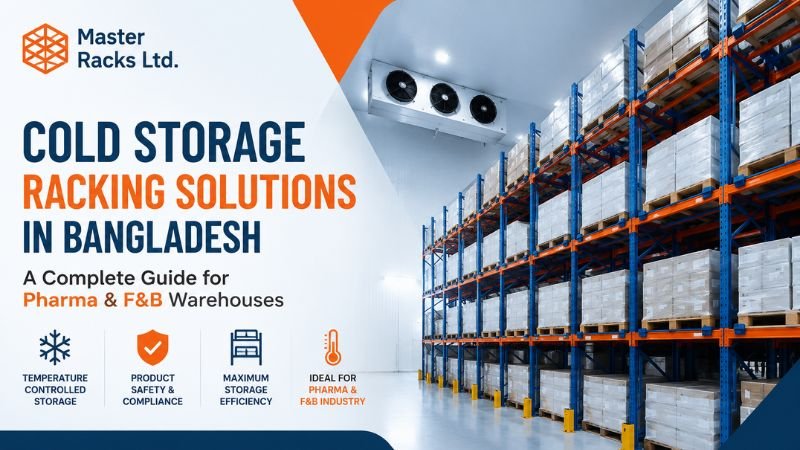
In Bangladesh, the food business, pharmaceutical industry, seafood business and agriculture industries are all depend on cold storage warehouses. But, like with any product, it’s not just about the cold temperatures to store products; it’s about having a strong, secure, and well-designed racking system to protect them. Choosing the right storage solution maximizes storage space, safeguards storage products and ensures the safety of workers and compliance to consumers
masterracksltd.com is here to let you know about Cold Storage Racking Solutions in Bangladesh: A Complete Guide for Pharma & F&B Warehouses
What is a Cold Storage Racking System?
A cold storage racking system is a type of warehousing storage which is designed for cold or frozen storage conditions. These systems are used in:
- Food processing facilities
- Frozen food warehouses
- Pharmaceutical storage
- Dairy industries
- Seafood processing plants
- Agricultural cold chains
Cold storage racks are designed to resist the effects of cold temperatures, humidity and condensation compared with conventional warehouse racks.
Why Specialized Racking is Necessary?
Cold environments present special operating issues. These include:
- Condensation and moisture
- Ice formation
- Heavy pallet loads
- Limited operating space
- Frequent forklift movement
- Temperature fluctuations
Normal warehouse shelves can wear out more quickly under these circumstances, thus it is better to invest in purpose-built systems.
A Complete Guide on Cold Storage Racking Solutions for Pharma & F&B Warehouses
If you have a cold storage system, there are structural safety considerations, classification of occupancy, fire protection, safe material storage and load considerations to observe. Cold storage buildings fall under specific occupancy requirements and the storage systems are designed to not to create unsafe loading conditions or to interfere with safe operations.
1. Make sure of the Right Type of Racking:
Various cold stores will need different storage systems. Popular options include:
- Selective pallet racking
- Drive-in racking
- Double-deep racking
- Push-back racking
- Mobile racking
- Pallet shuttle systems
The best answer is based on inventory turnover, space and product type.
2. Use Corrosion-Resistant Materials
Prolonged exposure to moisture and condensation is caused by cold storage environments. Recommended materials:
- Powder-coated steel
- Hot-dip galvanized steel
- Corrosion-resistant finishes
- Grade 316 stainless steel is suitable for use in specialized applications.
These materials help to prevent rust and extend the life of the racking system.
3. Design for appropriate load capacity
The racks are frequently used to store heavy pallets in cold storage. Important considerations:
- Maximum pallet weight
- Beam load capacity
- Upright strength
- Floor loading capacity
- Forklift operating loads
Overloading continues to be one of the top warehouse rack failure causes.
5. Check For Adequate Walkways
The most important thing within a cold warehouse is efficient movement. The planning of the aisles enhances:
- Forklift safety
- Picking efficiency
- Emergency access
- Air circulation
- Inventory handling
It is also advised to keep the passages and storage areas safe for operational safety.
6. Ensure Proper Airflow
There should be uniform circulation of cold air in the warehouse. Good airflow helps:
- Maintain consistent temperatures
- Prevent frost buildup
- Reduce energy consumption
- Protect product quality
Rack layout can obstruct air flow and decrease refrigeration efficiency.
7. Set up Rack Protection Systems
Cold storage facilities are very prone to forklift impacts. Protective accessories include:
- Upright guards
- End-of-aisle barriers
- Column protectors
- Safety rails
These minimize structural damage and extend rack life.
8. Keep fire safety measures.
Even in refrigerated spaces, fire safety is still a consideration. Consider:
- Adequate sprinkler clearance
- Emergency exit access
- Fire-rated building requirements
- Safe storage heights
- Clear evacuation routes
The layout of warehouses should not impede emergency response systems, in accordance with BNBC fire safety provisions.
9. Regular Rack Inspections.
Structural problems may not be noticeable in cold weather. Inspect regularly for:
- Bent uprights
- Loose bolts
- Corrosion
- Damaged beams
- Anchor movement
Regular inspections ensure safety and minimise unscheduled downtime.
Best Practices for Cold Storage Warehouse Design
The combination of effective racking, optimized refrigeration and safe operating procedures constitute a well-designed cold storage warehouse. The warehouse should be designed for maximum storage efficiency with sufficient aisles for forklifts and emergency access. Products should be stored according to their temperature specifications, inventory requirement, handling frequency etc.
To reduce waste, especially in food and pharmaceutical products, consider using FIFO or FEFO inventory techniques. Accurate labeling, warehouse management systems and bar code tracking enhance accuracy in inventory management.
Future expansion should be taken into account in the design phase as well. Scalable racking systems can be used to add extra storage space down the line without extensive alterations to the structure. Adopting efficient layouts, using quality materials, and carrying out regular maintenance can help cold storage operators boost productivity, cut operating costs, and ensure compliance with safety regulations.
Common mistakes to avoid
Poor warehouse planning causes a lot of issues in many cold storage units. Common mistakes include:
- Using standard racks rather than cold-rated systems
- Failure to adhere to load capacity guidelines.
- Preventing the flow of air between racks.
- Narrowing aisles to an inadequate width
- Skipping routine inspections
- Using low-quality materials
These errors can lead to higher maintenance costs, inefficiency in the warehouse, and safety risks. These problems can be avoided by investing in well-designed racking systems and adhering to good warehouse practices.
Selecting the Appropriate Racking Supplier in Bangladesh
Search for suppliers with:
- Custom warehouse design
- Structural engineering support
- High-quality steel construction
- Professional installation
- Load capacity calculations
- All products are subject to after-sales inspection and maintenance
A good racking supplier in Bangladesh should recognize what the local warehouses need and be knowledgeable of solutions that meet your industry, storage temperature, pallet size and operations.
Conclusion
Cold storage racking systems are an essential component in maintaining the quality of products, enhancing warehouse productivity, and promoting safety for workers. Businesses can create robust and secure cold storage units in Bangladesh by choosing the appropriate racking system, adopting corrosion-resistant materials, and adhering to the structural and safety guidelines. Ensuring long-lasting performance and compliance is achieved through proper planning, regular inspections and professional installation.
Hopefully you understood Cold Storage Racking Solutions in Bangladesh: A Complete Guide for Pharma & F&B Warehouses