
Blog
What Materials are Used in Industrial Racking Systems?

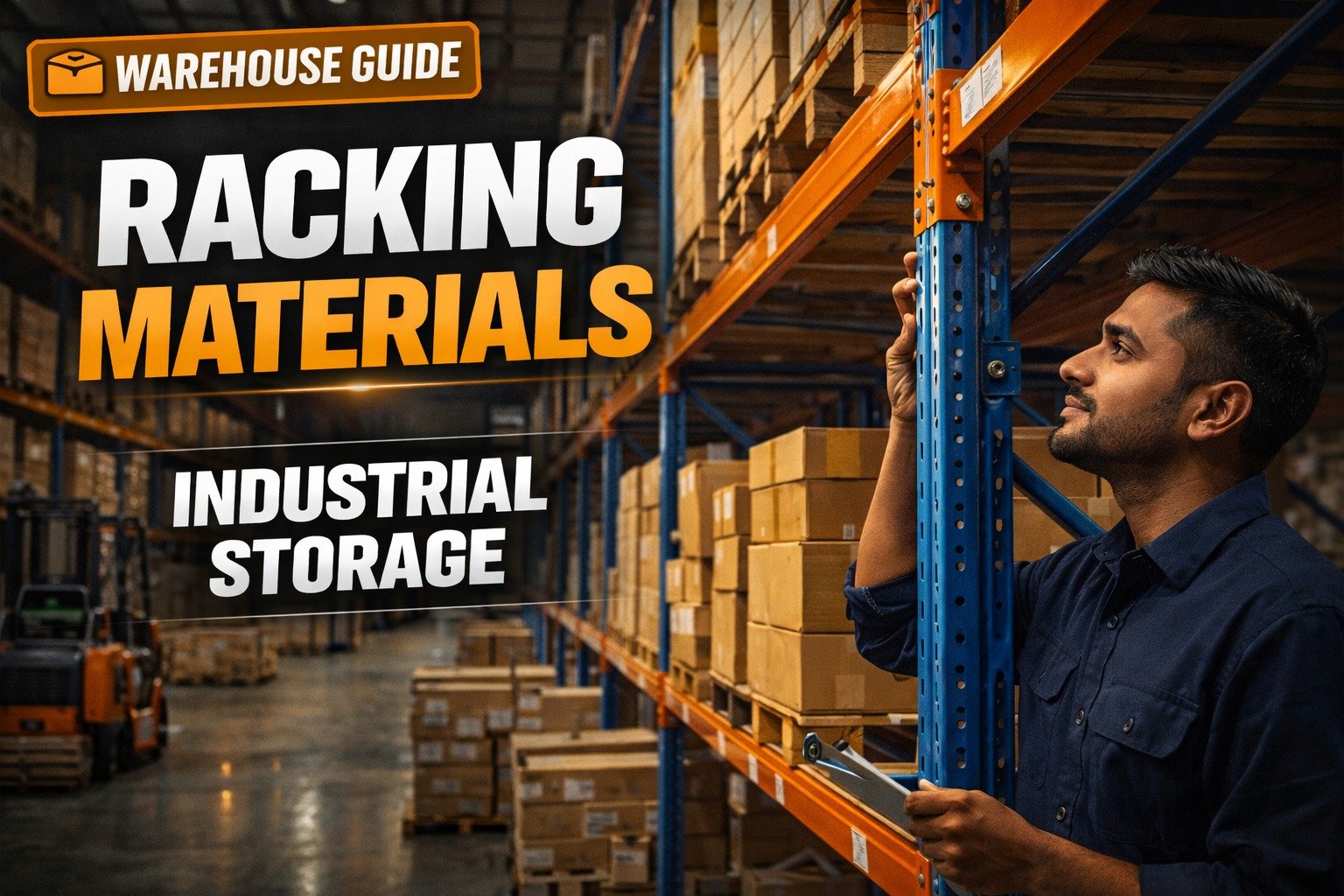
Industrial racking systems are required in warehouses, factories, and distribution centers so as to have efficient storage and organization. The durability, functionality, and security of such systems largely depend on the materials that are used in the manufacturing. Racks are made of good-quality material. From steel frames to protective coats, every component plays a role in the performance of a warehouse.
masterracksltd.com is here to let you know what materials are used in industrial racking systems!
Steel: The Core Component Used in Industrial Racking
Industrial racking systems are most commonly constructed using steel due to its high-level of strength and durability. The majority of heavy-duty racks are made of high-grade structural steel.
This is because there are several reasons why steel is the material of choice:
High load-bearing capacity
Superior structural integrity
Long service life
Wear resistance and impact resistance
Racking systems are usually composed of steel components as their primary parts, such as uprights, beams, and braces. All these structural elements collaborate to form a stable system that is capable of supporting pallets, containers, and other heavy items.
Manufacturers can also use steel to create modular racking systems that can be extended or redesigned according to the storage requirements. Businesses often choose solutions like the selective pallet racking system because of its flexibility and durability in warehouse storage.
Cold-Rolled Steel Components
A lot of industrial racking systems consist of cold-rolled steel that is treated at room temperature to enhance its strength and surface finish.
Cold-rolling has many benefits:
Increased tensile strength
Better dimensional precision
Continuous and smooth finish
Increased deformation resistance
Due to its characteristics, cold-rolled steel is widely utilized when creating rack uprights and beams. These parts should be in shape even with loads, and therefore, strength and precision play a very significant role.
Cold-rolled steel also assists manufacturers in making lighter parts that are still strong to be used in industries. Many modern very narrow aisle racking systems rely on such high-precision materials to maximize storage space while maintaining structural safety.
Structural Steel for Heavy-Duty Racking
In warehouses where the weight of items stored is very high, structural steel is widely employed as compared to the normal roll-formed steel. Structural steel is more massive and gives a lot more weight.
This kind of material is usually utilized in:
Cantilever racking systems
Drive-in racking systems
Heavy-duty pallet racking
Bulky material shelving in the industry
The structural steel racks are specifically handy in the construction, manufacturing, and car storage industries where huge or irregular objects are to be stored securely. For example, specialized storage like the cantilever racking system is designed to store long or bulky materials such as pipes, timber, and steel bars.
Despite the high cost of using structural steel racks in the short term, it has outstanding durability and long-term reliability. Many warehouses also install drive-in racking systems to handle heavy pallet storage efficiently.
Wire Mesh Decking
Another material that is used in industrial racking systems is wire mesh decking. It is normally attached to pallet rack beams to form a firm surface on which the pallets or cartons can be stored.
The important advantages of wire mesh decking are:
Better air flow in storage rooms.
Inventory management improved visibility.
Heightened safety of fire caused by the penetration of water by sprinkler systems.
Further support for non-regular loads.
Welded steel wire mesh decking is frequently used to create welded steel wire mesh decking which is strong and has an open design. This has made it a viable complement to most pallet racking systems and other warehouse storage solutions used in modern facilities.
Timber and Wooden Decking
Some industrial settings have been using timber or wooden decking instead of metal decking. Shelves may be formed by wooden boards laid over the beams of the racks, in which case the lighter goods can be stored.
Timber decking has the following benefits:
Affordable shelving system
Portable installation and replacement
Suitable for smaller storage loads
Easily accessible material
Nevertheless, the storage systems that are characterized by lighter-duty tend to use wood since these are not as strong and durable as steel.
Most warehouses would choose steel or wire decking with better load-bearing capacities and enhanced fire protection. Businesses looking for scalable storage infrastructure usually explore professional Industrial Rack solutions designed specifically for warehouse environments.
Protective Powder Coatings
To ensure the industrial racking systems are not subjected to corrosion, scratches and overall wear of the metals, powder coating is often used to finish the racking systems.
Powder coating has many advantages:
Better protection against rust and moisture.
Improved solidity of metal parts.
Harmonious and professional look.
Large color assortment of warehouse organization.
Rack components, including beams and uprights, are usually differentiated by different colors. This not only increases the visibility but can also enhance the safety of the workplace.
Powder-coated finishes are particularly useful in warehouses where there is a change of temperature or humidity, or when there is a high frequency of equipment movement. Such finishing is common in advanced storage setups like mobile racking systems where durability and movement efficiency are essential.
Galvanized Steel as a Corrosion-Resistant Material
There are highly industrialized environments that need extra waterproof and anti-corrosive protection. Racking systems manufactured are made with galvanized steel in such situations.
Galvanization is used to ensure that steel is covered with a protective layer of zinc. This coating helps to avoid rust formation and increase the life of the racking structure.
The galvanized steel racks are especially applicable to:
Cold storage facilities
Warehouse food and beverage
Outdoor storage areas
Humid environments
Galvanized steel is resistant to corrosion, and this fact contributes to the preservation of the integrity and safety of the racking systems in the long run. These materials are widely used in industries such as garment and textile warehouses in Bangladesh, where environmental conditions can vary significantly.
Bolts, Fasteners, and Connectors
Bolts, fasteners, and connectors are some small parts but essential materials used in industrial racking systems. These components fasten the structural components in place and make the whole rack stable when heavy loads are applied.
Some of the common materials used in these components include:
High-strength steel bolts
Corrosion-resistant fasteners made of zinc
Mortised brackets and connectors
To ensure structural stability as well as to ensure that the racks do not move when loading and offloading, proper fastening systems are necessary.
Quality connectors are also used to enable the racking systems to be built, altered or expanded as a warehouse layout is changed. This flexibility is one of the reasons why choosing the right rack supplier in Bangladesh plays a crucial role in warehouse efficiency.
Safety Accessories and Reinforcement Materials
The industrial racking systems are also enhanced with new materials that enhance safety and durability in modern times. These may include:
Steel column protectors
Guard rails and barriers
Rack supports and reinforcements.
Safety locking pins
These elements will safeguard the racking systems against unintentional hits by the forklifts or other warehouse machinery. They are also beneficial in keeping the storage system intact in the long run.
Modern warehouse designs are increasingly adopting advanced storage infrastructure as part of the future of warehouse management in Bangladesh, where safety, automation, and efficiency are becoming major priorities.
Conclusion
The racking systems used in industries are based on the strength and durability of materials so as to provide excellent storage facilities in the warehouse. In the harsh environment, steel is the main material, as it is very strong and has a high load-bearing capacity, whereas cold-rolled steel, structural steel, and galvanized finishes are used to improve performance. Other materials like wire mesh decking, timber shelving, and protective coats enhance functionality and safety. These materials help businesses to identify the most appropriate racking option in order to optimize storage, life cycle, and productivity of the warehouse.
Hopefully, you understood what materials are used in industrial racking systems!