

Blog
Custom Vs Standard Racking Systems: Which One Should You Choose?

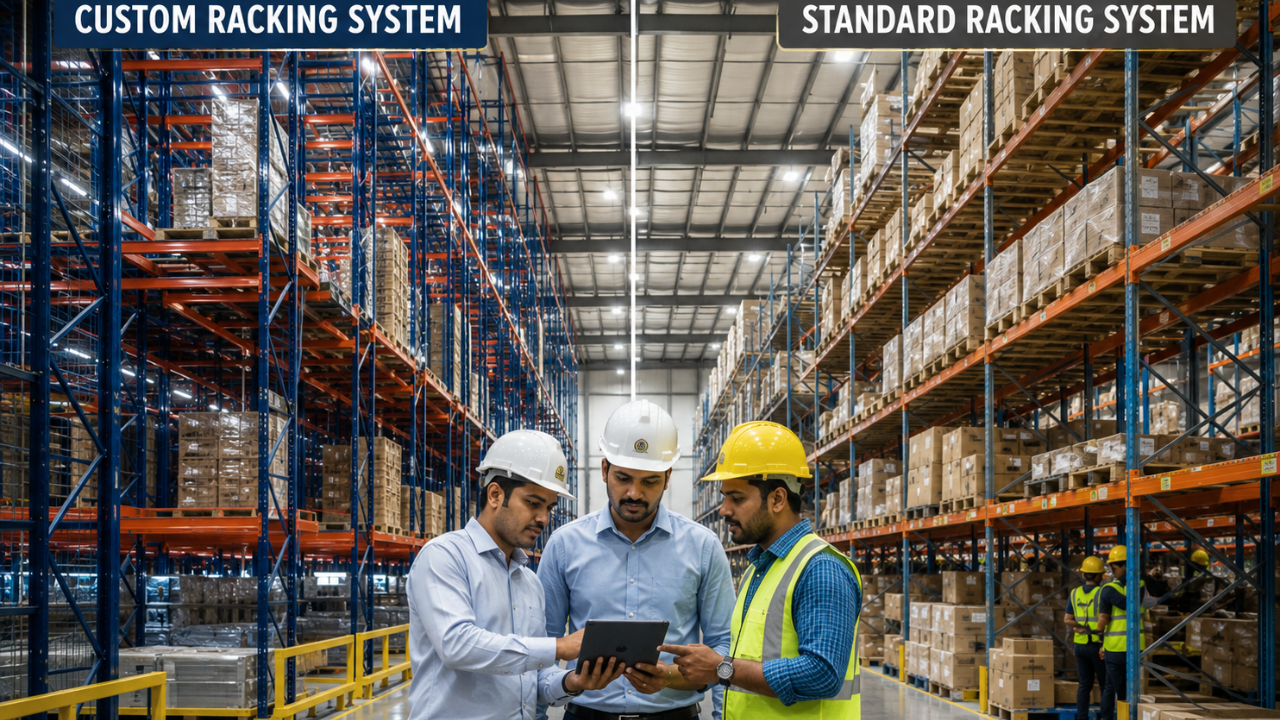
Choosing the racking system is really important for a warehouse. It helps the warehouse work better and store things. Businesses have to decide between custom racking systems and standard racking systems. They do this based on what they need to do and what they need to store. You should know the pros and cons of custom and standard racking systems. This helps businesses make storage decisions.
masterracksltd.com is here with a comprehensive guide on ‘Custom Vs Standard Racking Systems: Which One Should You Choose?’ Stop scrolling!
What is a Standard Racking System?
A standard racking system is a pre-designed storage structure built using common dimensions and configurations.
It is commonly used in:
- General warehouses
- Retail storage facilities
- Distribution centers
- Small industrial operations
These systems are mass-produced and designed for common storage requirements.
Common features:
- Fixed sizes and layouts
- Faster installation
- Lower upfront cost
- Widely available components
Standard racking is ideal for businesses with straightforward storage needs.
What is a Custom Racking System?
A custom racking system is specially designed to match specific warehouse requirements.
It is often used for:
- Unique inventory sizes
- Heavy-duty industrial storage
- Irregular warehouse layouts
- Specialized operational workflows
Custom systems are designed according to:
- Product dimensions
- Weight capacity
- Available warehouse space
- Material handling requirements
These systems focus on maximizing efficiency and flexibility.
1. Cost Comparison
Standard Racking
- Lower manufacturing cost
- Faster procurement
- More budget-friendly for small businesses
Custom Racking
- Higher design and installation cost
- Requires engineering and planning
- Better long-term optimization for complex operations
For businesses with limited budgets, standard racking is often more affordable initially.
2. Flexibility and Adaptability
Standard Racking
- Limited customization options
- Works best with common inventory sizes
- Less adaptable for unusual storage needs
Custom Racking
- Designed specifically for business operations
- Supports unique products and layouts
- Easier to optimize workflow efficiency
Custom systems provide significantly greater operational flexibility.
3. Space Optimization
Standard Racking
- Efficient for standard warehouse layouts
- May leave unused gaps in irregular spaces
Custom Racking
- Maximizes every available storage area
- Designed around warehouse dimensions
- Improves vertical and horizontal space utilization
Custom racking is better for warehouses with space limitations or unusual layouts.
4. Installation Time
Standard Racking
- Faster delivery and installation
- Pre-manufactured components reduce setup time
Custom Racking
- Requires planning and production time
- Longer installation process
Businesses needing immediate storage solutions often prefer standard systems.
5. Weight Capacity and Durability
Standard Racking
- Suitable for common warehouse loads
- Available in multiple strength levels
Custom Racking
- Built for specialized heavy-duty requirements
- Designed according to exact load specifications
Industries handling oversized or extremely heavy goods usually benefit from custom systems.
6. Scalability and Future Expansion
Standard Racking
- Easier to expand using identical modules
- Widely available replacement parts
Custom Racking
- Expansion may require additional custom manufacturing
- Better for long-term specialized operations
The right choice depends on future business growth plans.
7. Inventory Compatibility
Standard Racking
Best for:
- Palletized goods
- Standard cartons
- Retail inventory
- General warehouse products
Custom Racking
Best for:
- Long materials
- Heavy machinery parts
- Odd-shaped products
- Specialised industrial rack inventory
Inventory type is one of the biggest deciding factors.
8. Workflow Efficiency
Standard Racking
- Suitable for basic warehouse operations
- Standard aisle and picking systems
Custom Racking
- Designed for operational flow optimization
- Can improve picking speed and material handling efficiency
Custom systems often improve productivity in high-volume warehouses.
Standard Racking
- Easier to repair or replace parts
- Lower maintenance complexity
Custom Racking
- Specialized parts may take longer to replace
- Maintenance may require expert assistance
Standard systems are usually simpler for long-term maintenance.
Which One Should You Choose?
Choosing between custom and standard racking systems depends on several operational factors.
Choose Standard Racking if:
- You need a lower-cost storage solution
- Your inventory uses standard pallet sizes
- You want faster installation and setup
- Your warehouse layout is simple and organized
- You require easy replacement and expansion options
Choose Custom Racking if:
- You store oversized or irregular products
- Your warehouse has limited or unusual space
- You need specialized load capacity
- You want maximum storage optimization
- Your operations require improved workflow efficiency
For many businesses, the final decision depends on balancing budget, operational efficiency, and long-term scalability. Small warehouses often benefit from standard systems, while larger industrial facilities usually gain more value from custom-designed storage solutions that improve productivity and maximize available space.
Importance of Professional Storage Planning
Professional warehouse planning is essential before installing any racking system.
Proper planning helps:
- Improve warehouse workflow efficiency
- Maximize vertical and horizontal storage space
- Reduce operational bottlenecks
- Improve worker and forklift movement
- Ensure proper load distribution and safety
Storage experts analyze:
- Warehouse dimensions
- Ceiling height
- Inventory size and weight
- Material handling equipment
- Future expansion requirements
Without professional planning, businesses may experience wasted space, poor accessibility, and costly future modifications. In complex industrial environments, custom racking systems often require engineering analysis to maintain structural stability and operational efficiency. Proper planning ensures that the storage system supports long-term business growth while improving productivity and reducing operational risks.
Common Mistakes Businesses Make
Many businesses make costly mistakes when selecting warehouse storage systems.
Common mistakes include:
- Choosing based only on low price
- Ignoring future warehouse expansion
- Using standard racks for specialized inventory
- Overinvesting in unnecessary custom systems
- Ignoring weight capacity requirements
- Poor warehouse layout planning
- Improper installation and load management
These issues can reduce storage efficiency, create safety risks, and increase long-term operational costs. Businesses should carefully evaluate inventory requirements, workflow efficiency, and future scalability before choosing between custom and standard racking systems. Strategic planning helps ensure better storage performance and long-term warehouse productivity.
Conclusion
Both custom and standard racking systems offer valuable storage advantages, but the right choice depends on your warehouse operations and inventory requirements. Standard racking systems are cost-effective and suitable for general storage needs, while custom systems provide better flexibility, optimization, and support for specialized operations. Businesses should evaluate factors such as budget, warehouse layout, inventory type, and future expansion before making a decision. Choosing the correct racking system improves efficiency, maximizes storage capacity, and supports long-term warehouse productivity and operational success.
Hopefully, this guide, ‘Custom Vs Standard Racking Systems: Which One Should You Choose?’ has been useful!